
The Hakeem Olajuwon field guide series explores the intersection of basketball, identity, immigration, and mythology through a multi-book editorial system centered around one of Houston’s most influential cultural figures. Rather than functioning as a traditional sports publication, the project reframes Olajuwon’s legacy through themes of discipline, faith, perseverance, and the broader idea of the American Dream. The series examines how Hakeem’s story transcends athletics, positioning him as both a basketball icon and a symbol of aspiration for immigrant and first-generation communities.

Three separate field guides are structured around a distinct grid system and conceptual approach. As the series progresses, the layouts gradually shift from rigid and controlled to increasingly expressive and deconstructed. This progression mirrors the evolving narrative structure of the books themselves — moving from historical documentation toward emotional interpretation and cultural commentary.
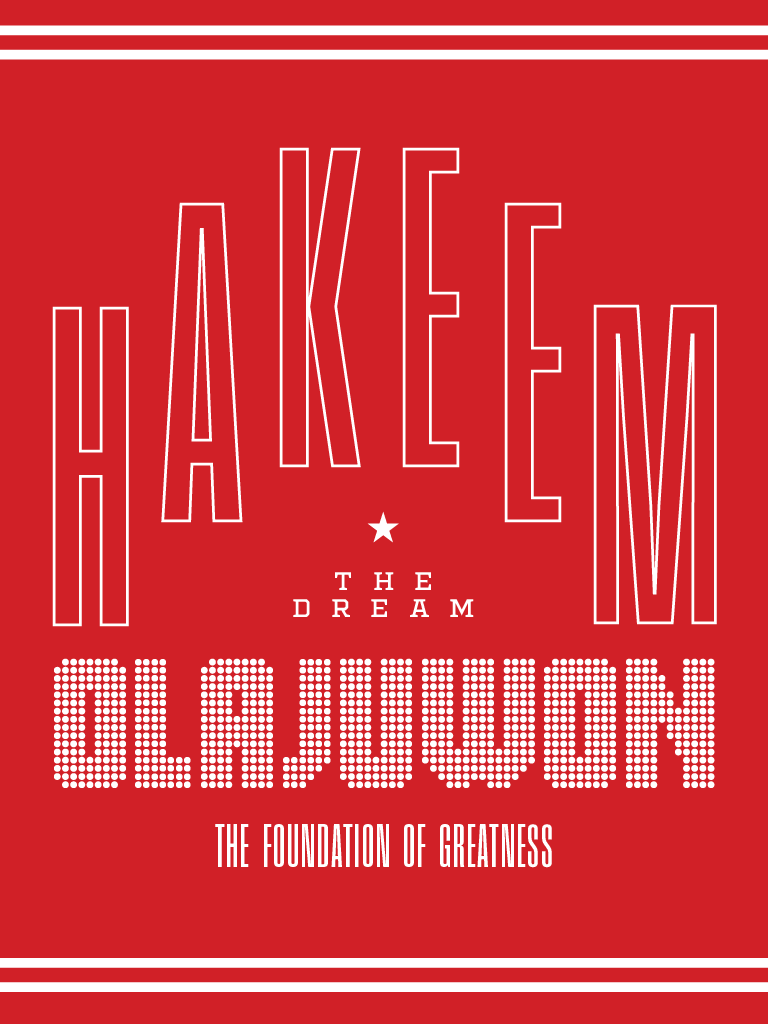
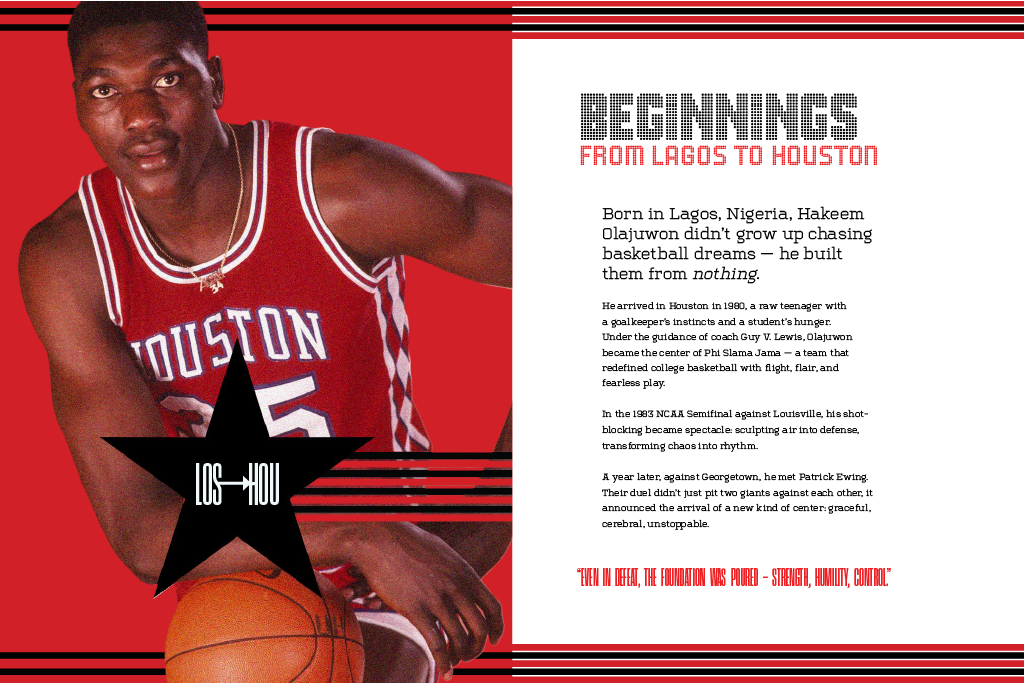
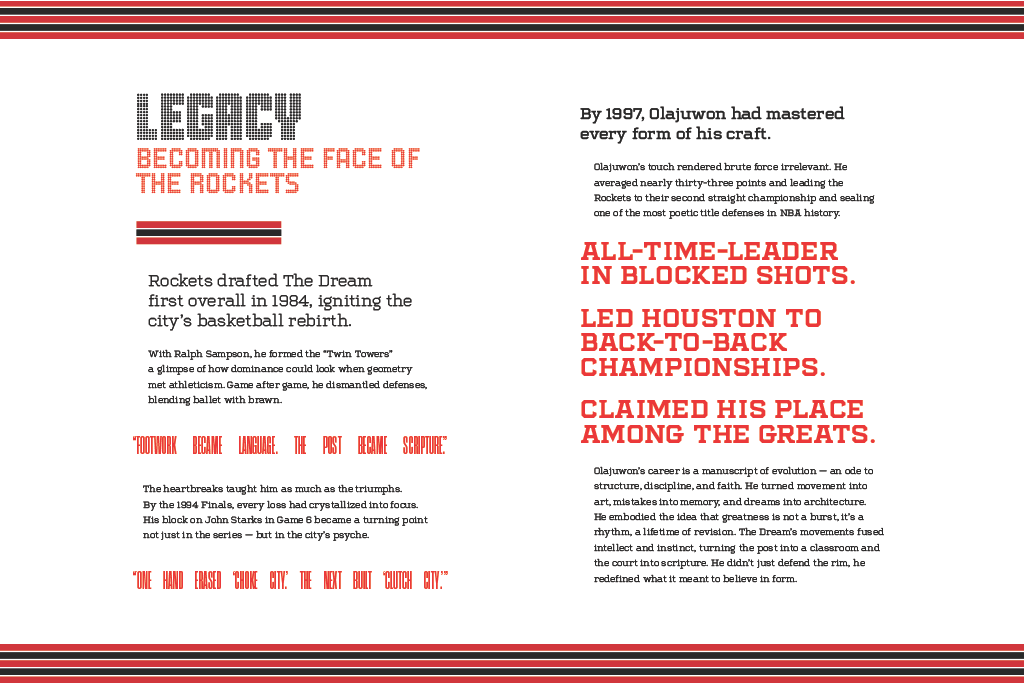
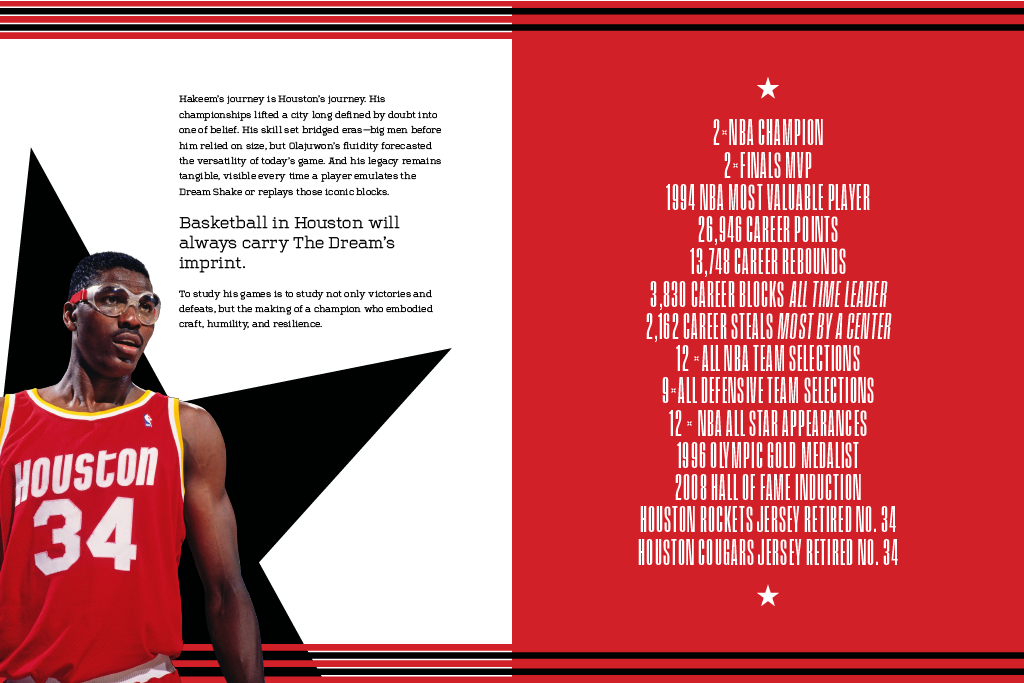

Field Guide 1 utilizes a manuscript-driven grid system focused on clarity, hierarchy, and historical storytelling. The layouts prioritize structured pacing, archival imagery, pull quotes, and statistical documentation to establish the foundational narrative of Hakeem’s career and impact on Houston basketball culture. The system emphasizes order and readability while introducing recurring visual motifs carried throughout the series.
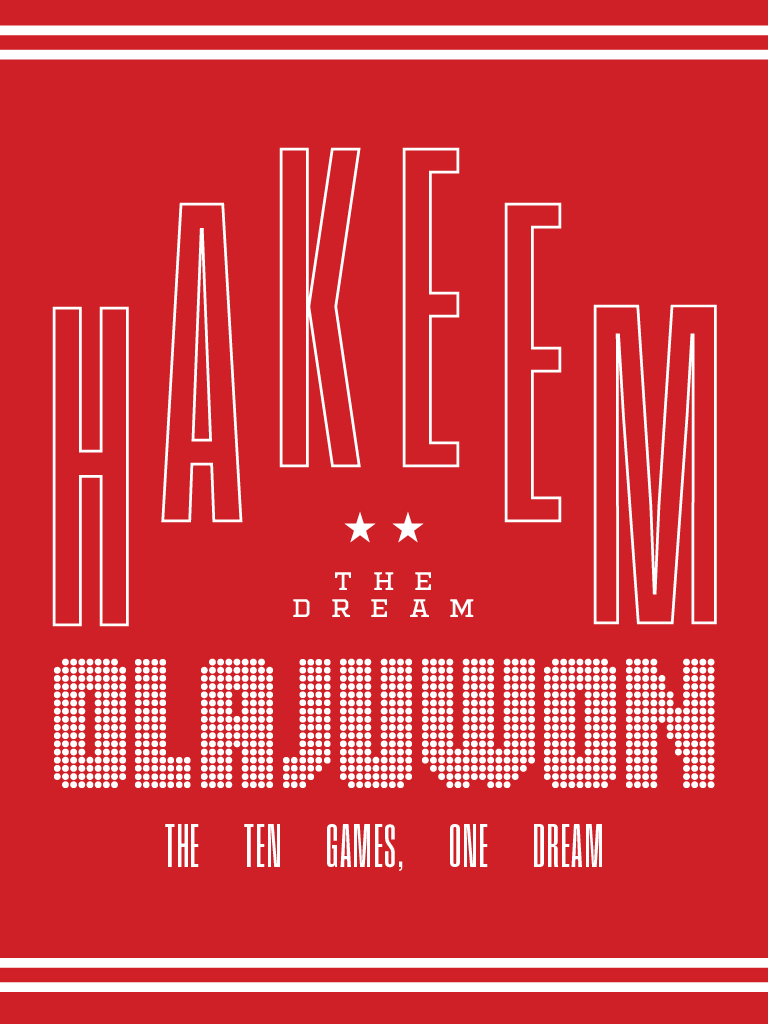
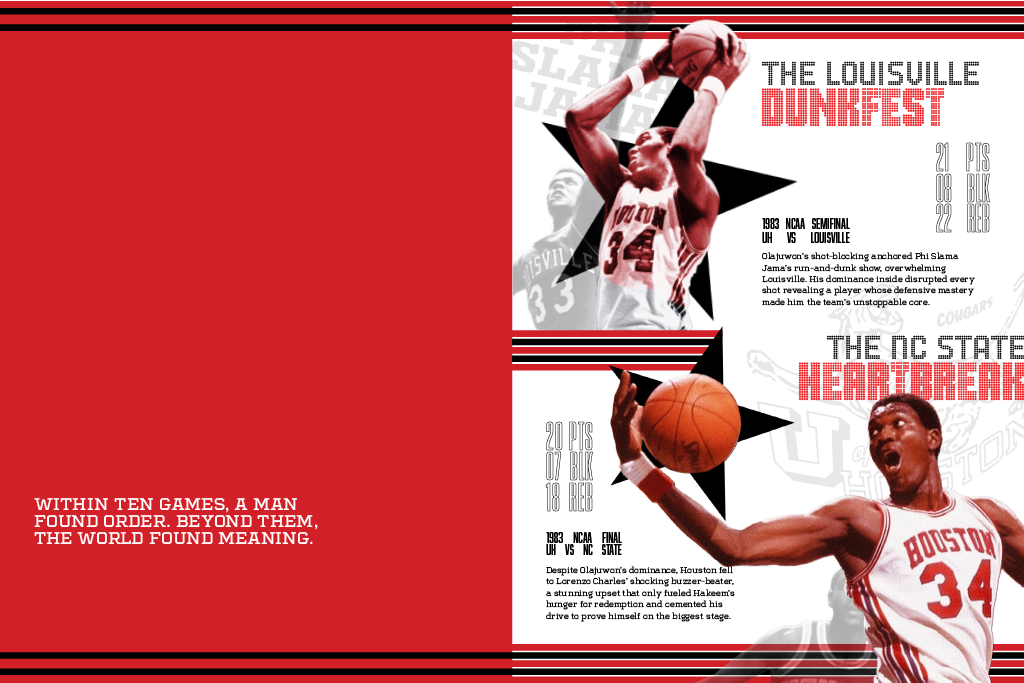
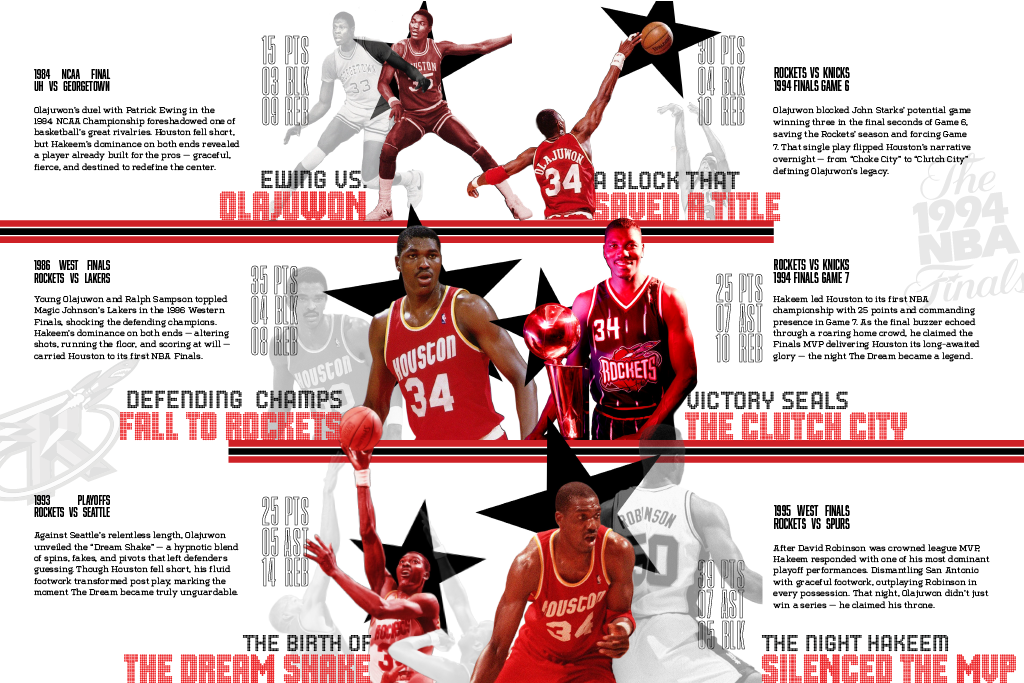


Field Guide 2 expands into a modular grid structure, allowing for more dynamic relationships between image, typography, and spatial rhythm. The compositions become more energetic and layered, reflecting the movement, physicality, and intensity of Olajuwon’s playing style. Typography begins functioning more expressively throughout the layouts, balancing informational structure with emotional tone and visual momentum.
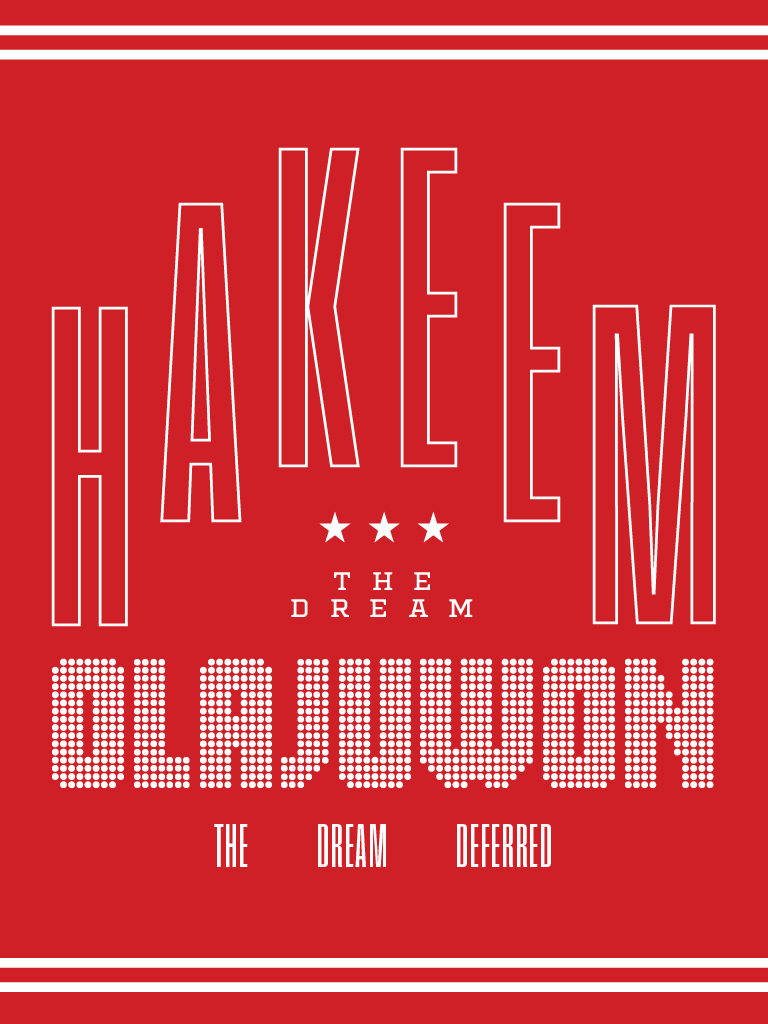
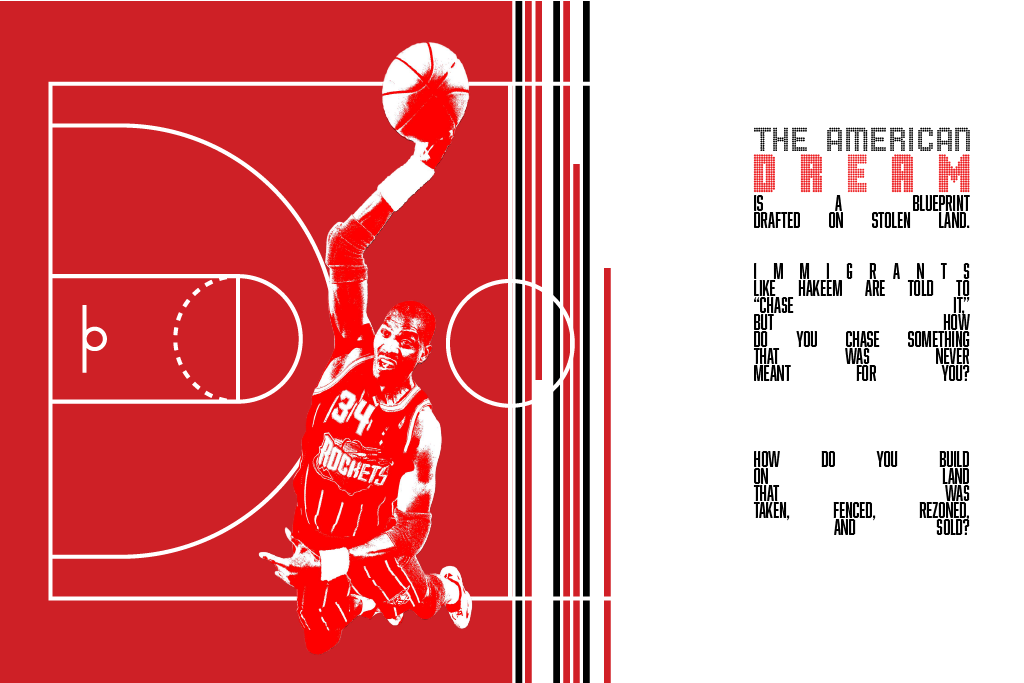



Field Guide 3 deconstructs the established systems introduced in the earlier books. The layouts become fragmented, typographically dense, and visually confrontational, exploring the mythological dimension of Hakeem’s legacy and its relationship to larger conversations surrounding race, success, immigration, and American identity. The book positions “The Dream” not simply as a nickname, but as a metaphor for projection, hope, and the narratives society constructs around achievement.